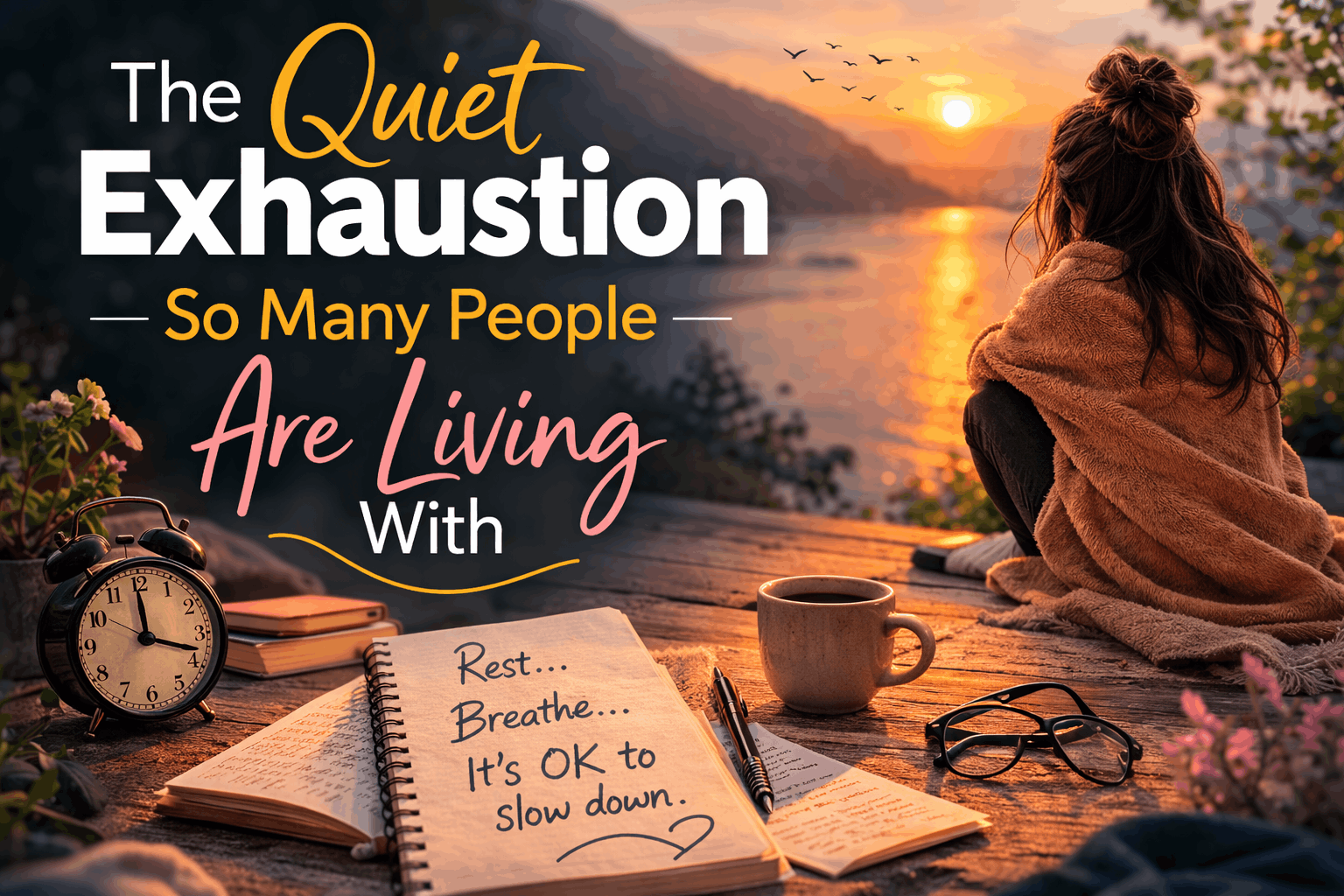
You may not look tired.
You may still show up, respond, smile, and get through the day.
And yet — deep down — you feel worn out in a way rest doesn’t seem to fix.
This is a different kind of exhaustion.
A quiet one.
The kind many people are carrying without words.
This Isn’t Just “Being Tired”
Quiet exhaustion doesn’t always come from lack of sleep.
It often shows up as:
- Feeling drained even on calm days
- Waking up without energy or motivation
- Feeling emotionally heavy for no clear reason
- Struggling to feel excited about things you once enjoyed
- Wanting rest, but not knowing what kind
It’s the exhaustion of always holding it together.
Why So Many People Feel This Way Today
Modern life doesn’t always overwhelm loudly.
Often, it exhausts us slowly.
1. Constant Mental Stimulation
Your mind rarely gets silence — notifications, screens, information, expectations. Even downtime is filled with noise.
2. Emotional Load Without Release
Many people support others, manage responsibilities, and suppress their own needs — day after day.
3. Stress That Never Fully Switches Off
When stress becomes constant, the nervous system stays alert. According to the World Health Organization, long-term stress contributes significantly to burnout and emotional fatigue.
4. Rest That Isn’t Restorative
Scrolling, multitasking, and irregular routines may feel like rest — but they don’t truly reset the body or mind.
Quiet Exhaustion Is Often Nervous-System Related
When your nervous system doesn’t feel safe enough to relax, your body stays in a low-level “survival mode.”
You may notice:
- Shallow breathing
- Muscle tension
- Brain fog
- Emotional numbness
- A sense of always being “on”
The Mayo Clinic explains that ongoing fatigue is frequently linked to stress patterns, sleep quality, and lifestyle rhythms — not just physical illness.
Why Pushing Through Makes It Worse
Quiet exhaustion is often invisible — even to ourselves.
So we:
- Push harder
- Ignore signals
- Tell ourselves to be stronger
- Compare our fatigue to others
But exhaustion isn’t a failure of discipline.
It’s a request for regulation, gentleness, and rhythm.
What Helps When You’re Quietly Exhausted
Not drastic change.
Not productivity hacks.
What helps is soft support.
1. Create Small Pauses During the Day
Even 2–3 minutes of stillness can help the nervous system reset.
2. Lower Stimulation in the Evenings
Dim lights, fewer screens, slower activities — signal safety to your body.
3. Eat and Sleep Consistently
Regular rhythms matter more than perfection.
4. Let One Thing Be Unfinished
Rest isn’t earned. It’s required.
5. Name What You’re Feeling
Even quietly, to yourself. Exhaustion often softens once it’s acknowledged.
You’re Not Weak for Feeling This Way
If you’re living with quiet exhaustion:
- You’re not lazy
- You’re not broken
- You’re not failing
You’re responding to a world that rarely pauses.
And your body is asking — gently — for care.
A Gentle Reminder
You don’t need to collapse to deserve rest.
You don’t need to justify your tiredness.
You don’t need to explain your limits.
Sometimes, the bravest thing you can do is stop pushing — and start listening.
Final Thoughts
Quiet exhaustion is common.
But it doesn’t have to be permanent.
Healing begins with slowing down, softening expectations, and offering yourself the same compassion you give others.
Start small.
Start gently.
Start today.