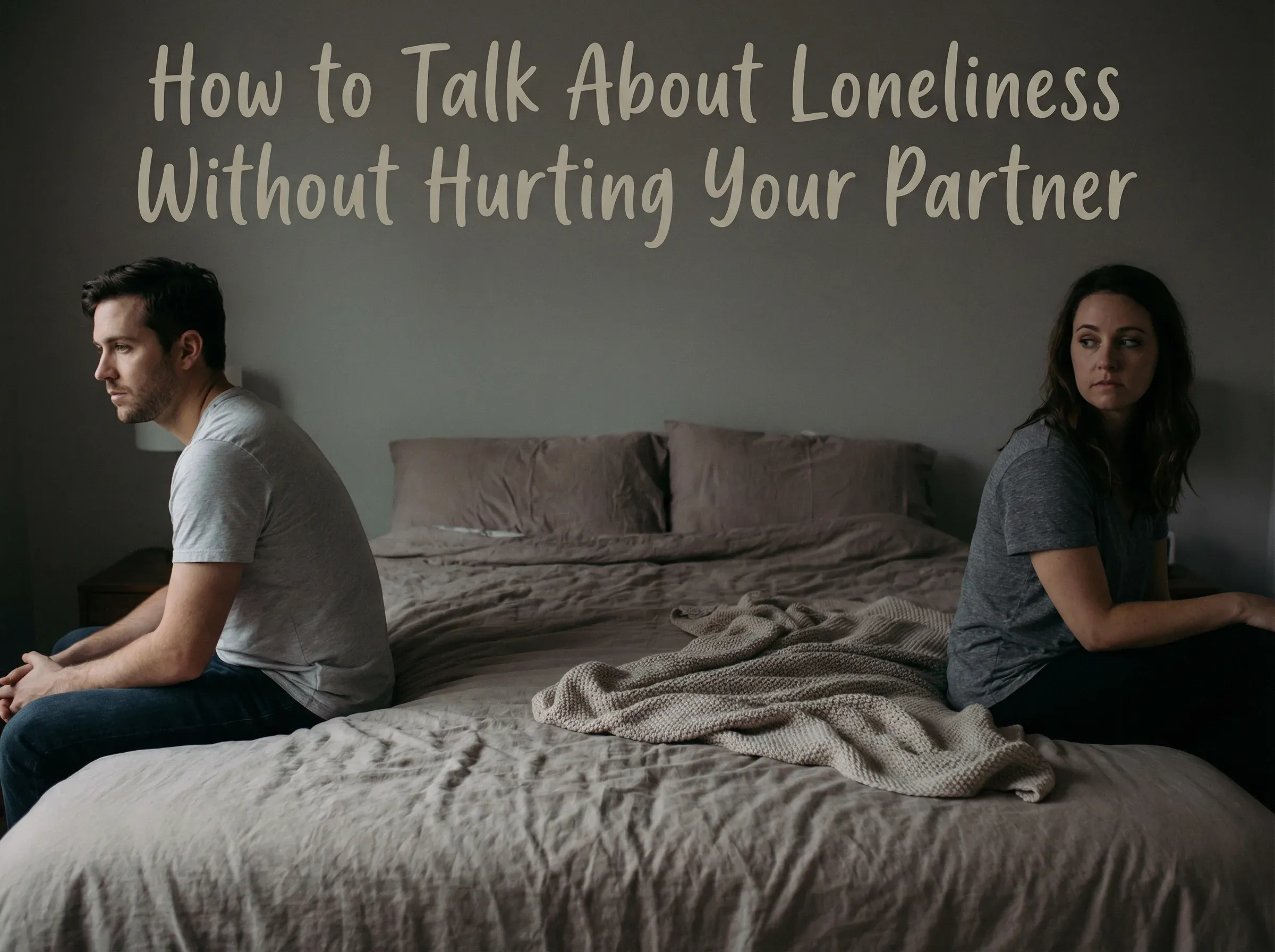
Talking about loneliness in a relationship can feel risky. You may worry about sounding ungrateful, starting an argument, or hurting someone you care deeply about.
So instead, many people stay quiet.
But silence often hurts more than honest, gentle words.
If you’ve been feeling lonely in your relationship and don’t know how to bring it up without causing pain, this guide is for you.
First, Let This Be Clear
Feeling lonely does not mean:
You don’t love your partner
Your relationship is broken
You are asking for too much
Loneliness is not an accusation. It’s a signal—that something inside you needs attention.
Why Talking About Loneliness Feels So Hard
Many people avoid this conversation because they fear:
Making their partner feel blamed
Being misunderstood
Triggering defensiveness
Hearing, “But I’m right here”
Loneliness is emotional, not logical. And emotional conversations require care.
Step 1: Get Clear With Yourself First
Before you talk, gently ask yourself:
What do I actually miss?
Is it attention, affection, listening, reassurance, or presence?
When do I feel most disconnected?
Clarity reduces blame. You’re sharing a feeling—not presenting a complaint.
Step 2: Choose the Right Moment
Avoid starting this conversation when:
You’re already upset
Your partner is stressed or distracted
You’re in the middle of conflict
Choose a calm, neutral moment—when neither of you feels rushed.
Safety matters.
Step 3: Speak From Your Experience (Not Their Mistakes)
Instead of:
“You never listen to me anymore.”
Try:
“I’ve been feeling a little disconnected lately, and I miss feeling close to you.”
This keeps the conversation about your inner world, not their shortcomings.
Step 4: Name the Feeling, Not the Fault
Loneliness is a feeling—not proof of failure.
You can say:
“I feel emotionally distant sometimes.”
“I miss our deeper conversations.”
“I don’t always feel seen lately.”
Avoid words like always, never, or you don’t care.
Step 5: Share What Helps You Feel Connected
Your partner may want to help but not know how.
Be specific, gentle, and realistic:
“It helps when we talk without phones.”
“I feel closer when you ask how I’m really doing.”
“Small check-ins mean a lot to me.”
This turns vulnerability into a bridge—not a wall.
Step 6: Make Space for Their Feelings Too
Your partner may feel surprised, sad, or unsure.
Let them respond. Listen without correcting. Connection grows when both sides feel safe to speak.
If the Conversation Feels Uncomfortable
That doesn’t mean it was wrong.
Discomfort often appears when something honest finally surfaces.
What matters is:
Respect
Calm
Willingness to understand
Not perfection.
When Words Still Feel Hard
If talking feels overwhelming, try:
Writing a short note
Sharing this article
Starting with: “I don’t want to hurt you, but I want to be honest about how I feel.”
Gentle honesty is an act of care.
A Soft Reminder for You
Wanting emotional closeness is not neediness. Expressing loneliness is not criticism. Asking for connection is not a failure.
It’s courage.
And the right conversation—spoken with care—can bring you closer than silence ever will.