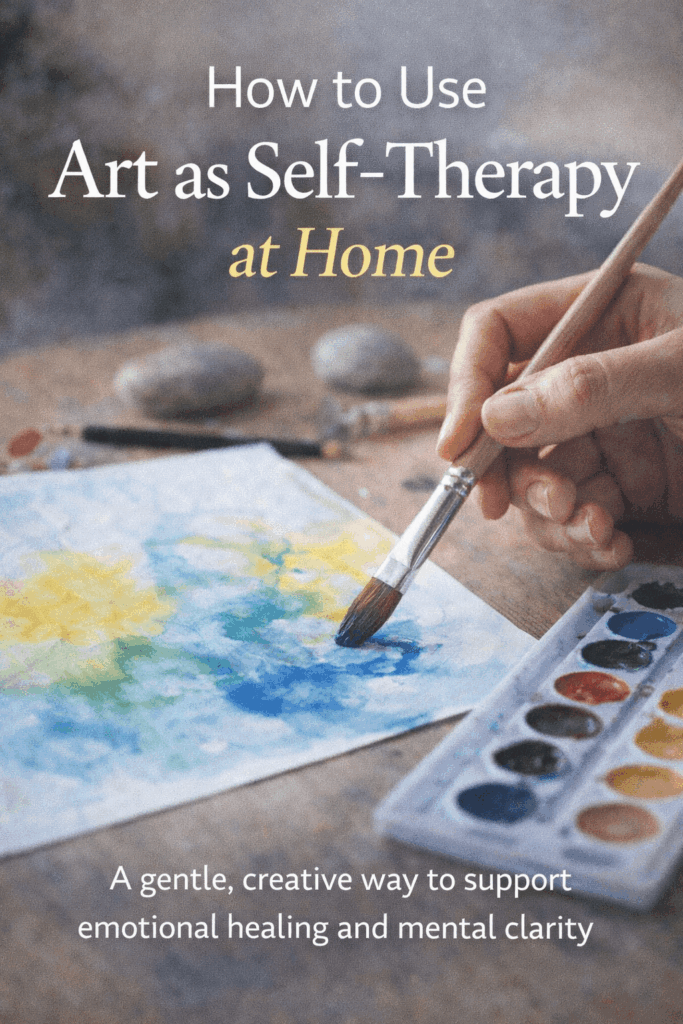
A gentle, creative way to support emotional healing and mental clarity
You don’t need to be an artist to heal through art.
Art as self-therapy is not about talent or perfection — it’s about expression. When words feel heavy or emotions are hard to explain, creativity gives them a safe place to land.
At home, with simple tools and a few quiet moments, art can become a powerful form of emotional self-care.
What Is Art as Self-Therapy?
Art as self-therapy (also called creative self-expression) uses activities like drawing, painting, coloring, collage, or journaling to support emotional well-being.
It helps you:
- Release stress
- Process emotions
- Improve focus
- Feel calmer and more grounded
You don’t analyze the art — you experience it.
Why Art Helps the Mind Heal
Creative activities activate areas of the brain linked to relaxation and emotional regulation. When you engage in art, stress hormones decrease and your nervous system shifts into a calmer state.
Art gives emotions movement instead of keeping them trapped inside.
Simple Ways to Practice Art Self-Therapy at Home
1) Free Drawing or Doodling
Grab a pen or pencil and draw whatever comes to mind. No plan. No judgment.
Helpful for: anxiety, overthinking, mental fatigue
2) Coloring for Calm
Adult coloring books or simple patterns help quiet racing thoughts.
Helpful for: stress relief, focus, bedtime relaxation
3) Emotional Color Painting
Choose colors based on how you feel — not how things “should” look.
Helpful for: emotional release, mood awareness
4) Collage Your Feelings
Cut images or words from magazines that reflect your emotions or hopes.
Helpful for: self-reflection, motivation, healing after change
5) Art Journaling
Combine drawings, symbols, colors, and a few words in a notebook.
Helpful for: self-understanding, emotional processing
6) Mandala or Pattern Drawing
Repeating shapes can be deeply grounding.
Helpful for: calming the nervous system, mindfulness
Create a Safe Art Space at Home
You don’t need a studio. Just:
- A small table or corner
- Natural light if possible
- Basic supplies (paper, pens, colors)
- Silence or soft music
Minimalist Living for Mental Clarity
Let Go of “Doing It Right”
This is important:
There is no right or wrong in art self-therapy.
- Don’t judge your work
- Don’t compare
- Don’t aim for beauty
Aim for honesty.
When Art Helps the Most
Art self-therapy is especially helpful when:
- You feel emotionally stuck
- You’re overwhelmed or anxious
- You want calm without talking
- You need a screen-free break
A Gentle Note
Art self-therapy supports emotional wellness, but it doesn’t replace professional care. If distress feels intense or persistent, reaching out to a mental health professional is always a positive step.
Final Thought
Art doesn’t ask you to explain yourself.
It simply invites you to show up — as you are.
A few colors. A few minutes.
Sometimes, that’s enough to begin healing.