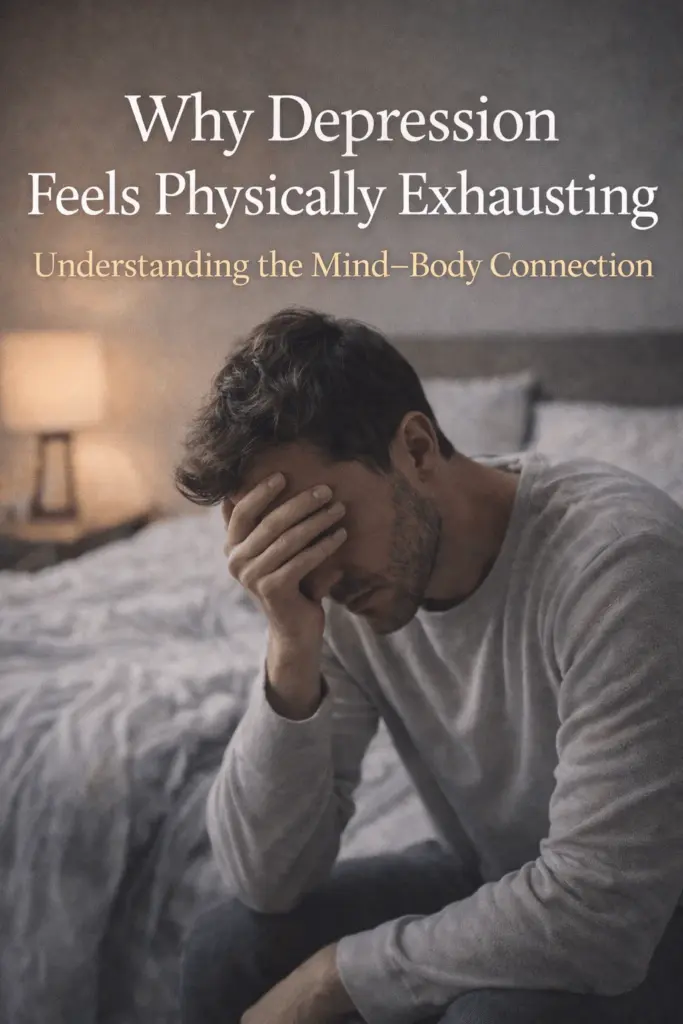
Understanding the body–mind connection behind emotional fatigue
Depression isn’t only emotional.
For many people, it feels deeply physical — heavy limbs, constant tiredness, low energy, body aches, and a sense that even simple tasks require enormous effort.
If you’ve ever wondered “Why does depression make me feel so physically drained?” — you’re not imagining it. There are real biological and psychological reasons behind this experience.
Let’s explore why depression affects the body, and gentle ways to support yourself through it.
Depression Is a Whole-Body Experience
Although depression is a mental health condition, the brain and body are closely connected. When mood changes, the nervous system, hormones, immune system, and sleep patterns change too.
This is why depression often comes with:
- Constant fatigue
- Low motivation
- Muscle tension or aches
- Slowed movement
- Headaches
- Digestive discomfort
The body is responding to prolonged emotional stress — just like it would respond to physical strain.
1. Brain Chemistry Affects Energy
Depression is linked with changes in neurotransmitters such as serotonin, dopamine, and norepinephrine — chemicals that influence mood, motivation, and alertness.
When these are imbalanced, the brain struggles to regulate:
- Energy levels
- Sleep–wake cycles
- Focus and drive
The result: feeling tired even after rest.
2. Sleep Disruption Drains the Body
Depression commonly affects sleep patterns:
- Trouble falling asleep
- Waking frequently
- Sleeping too much but still feeling tired
Poor-quality sleep prevents the body from repairing itself — leading to persistent exhaustion.
Sleep Smarter: Building Healthy Bedtime Habits for Better Rest
3. Chronic Stress Raises Inflammation
Long-term emotional stress can increase inflammatory activity in the body. Research shows that higher inflammation is associated with:
- Fatigue
- Body soreness
- Brain fog
- Low physical stamina
This is one reason depression often feels similar to being physically ill.
4. The Nervous System Stays in “Low Power Mode”
When overwhelmed, the nervous system may shift into a shutdown or low-energy state — a natural protective response. This can feel like:
- Slowness
- Heaviness
- Lack of drive
- Difficulty initiating tasks
It’s not laziness — it’s the body trying to conserve energy.
5. Appetite Changes Affect Strength
Depression can reduce appetite or increase cravings for low-nutrient foods. Over time, this may lead to:
- Blood sugar imbalance
- Lower nutrient intake
- Reduced physical energy
Food is quiet fuel for emotional and physical health.
You Are Not Weak — This Is Real
One of the hardest parts of depression is feeling guilty for being tired.
But physical exhaustion during depression is a genuine biological response, not a character flaw.
Your body is asking for care — not criticism.
Gentle Ways to Support Your Energy
These aren’t cures — just small supportive steps:
- Keep a simple daily routine
- Get natural daylight when possible
- Eat small balanced meals
- Stretch or walk gently
- Reduce pressure on yourself
- Talk with someone safe
- Consider professional support if symptoms persist
Small steps count. Even resting is progress.
When to Seek Support
If exhaustion, low mood, or loss of function lasts more than a few weeks, reaching out to a mental health professional can help. Therapy and medical support exist for many needs and budgets.
Asking for help is a strength.
If You Feel Unsafe
If you ever feel at risk of harming yourself:
- Contact local emergency services
- Reach out to crisis support services in your country
- Talk to someone you trust immediately
You deserve support right now.
Final Thoughts
Depression feels physically exhausting because the mind and body are deeply connected. Understanding this can replace self-blame with self-compassion.
You’re not failing.
You’re responding to something heavy — and healing is possible.