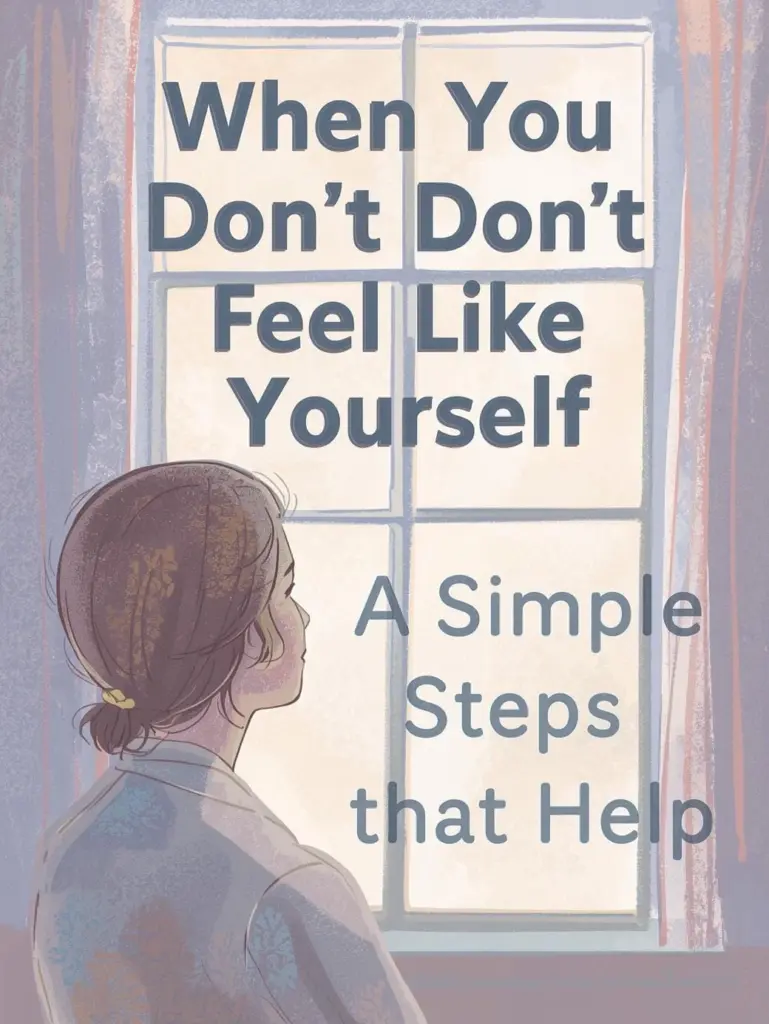
A gentle guide for finding your way back to emotional balance
Some days, you wake up and feel… different.
Not quite sad. Not quite okay.
Just not yourself.
You may feel disconnected, tired, unmotivated, or emotionally flat. This experience is more common than most people realize — and it doesn’t mean something is “wrong” with you. It means your mind and body are asking for care.
This guide offers simple, supportive steps to help you gently reconnect with yourself again.
What Does “Not Feeling Like Yourself” Mean?
You might notice:
- Loss of interest in things you once enjoyed
- Low energy or constant fatigue
- Feeling emotionally numb or distant
- Difficulty focusing
- Changes in sleep or appetite
- Wanting to withdraw from others
These feelings can come from stress, burnout, life changes, grief, anxiety, or depression. Whatever the cause — your experience is valid.
First: Be Gentle With Yourself
When you don’t feel like yourself, self-criticism often appears:
“I should be stronger.”
“I should be doing more.”
Instead, try:
“I’m going through something. I deserve patience.”
Small compassion toward yourself is the first step toward healing.
1. Create One Tiny Daily Anchor
When everything feels off, structure helps.
Choose one simple daily action:
- Open the curtains in the morning
- Drink a glass of water
- Step outside for 5 minutes
Small consistency signals safety to your nervous system.
🔗 Internal link suggestion:
Morning Routines That Support Emotional Balance
2. Get Gentle Exposure to Natural Light
Natural daylight helps regulate mood-related brain chemicals and sleep rhythms. Even sitting near a window or taking a short walk can help.
3. Move Your Body Kindly
Movement doesn’t have to mean workouts.
Try:
- Light stretching
- A short walk
- Dancing to one song
Movement releases natural mood-supporting chemicals in the brain.
4. Support Rest Without Pressure
Sleep may feel disrupted when emotions are heavy.
Focus on rest, not perfection:
- Keep a calm evening routine
- Reduce late-night screens
- Create a cozy sleeping space
5. Eat Something Nourishing
Skipping meals can worsen emotional dips.
Aim for simple balanced foods:
- Fruits or vegetables
- Whole grains
- Protein sources
Food is quiet support for the brain.
6. Reach Out to One Safe Person
You don’t need to explain everything.
A simple message like:
“Can we talk for a bit?”
is enough.
Connection reduces emotional isolation.
7. Reduce Mental Overload
When you feel off:
- Lower expectations temporarily
- Do fewer tasks
- Take short breaks
Rest is productive when healing.
8. Consider Professional Support
If feeling unlike yourself lasts for weeks, or affects daily life, speaking with a mental health professional can help. Therapy and support options exist for many needs and budgets.
This is a sign of care — not weakness.
If You Feel Unsafe
If you ever feel at risk of harming yourself:
- Contact local emergency services
- Reach out to crisis support lines in your country
- Talk to a trusted person immediately
You deserve help right now.
Final Thoughts
Not feeling like yourself can be unsettling — but it does not last forever.
Small supportive actions, gentle self-care, and reaching out for help can guide you back toward feeling grounded again.
You’re not broken.
You’re human — and healing is possible.