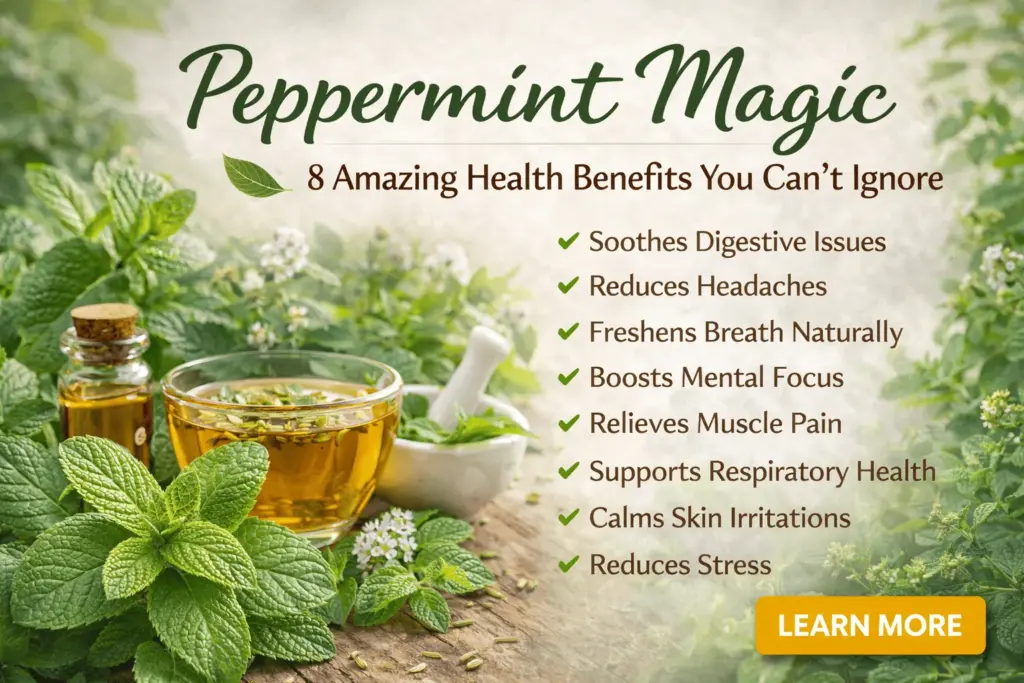
Peppermint is one of nature’s most refreshing and soothing herbs, widely known for its cooling flavor, aromatic fragrance, and incredible health benefits. From easing digestive issues to boosting mental clarity, peppermint has been cherished for centuries in traditional medicine, teas, and natural remedies.
Whether you use it fresh, as an essential oil, or as dried leaves, peppermint is a versatile herb that supports both physical and mental well-being.
What is Peppermint?
Peppermint (Mentha × piperita) is a hybrid of watermint and spearmint. It is native to Europe and North America and is now cultivated worldwide. Peppermint leaves are aromatic, green, and slightly serrated, and are used in teas, cooking, candies, oils, and natural remedies.
Nutritional Profile (per 1 tablespoon dried leaves / ~2g):
- Calories: 2–3 kcal
- Protein: 0.1 g
- Fiber: 0.3 g
- Carbohydrates: 0.5 g
- Rich in: Vitamin A, Vitamin C, manganese, iron, and antioxidants
Health Benefits of Peppermint
1. Soothes Digestive Issues
Peppermint is well-known for relieving indigestion, bloating, gas, and stomach cramps. Its active compounds relax the digestive tract muscles, allowing smoother digestion.
2. Relieves Headaches and Migraines
The cooling effect of peppermint oil can help reduce tension headaches and migraines when applied to the temples or inhaled.
3. Freshens Breath
Chewing peppermint leaves or using peppermint oil in oral care can fight bad breath and reduce oral bacteria naturally.
4. Supports Respiratory Health
Peppermint’s menthol content can open nasal passages, ease congestion, and reduce symptoms of cold and flu, making it a natural decongestant.
5. Boosts Mental Clarity and Focus
The refreshing aroma of peppermint stimulates the mind, improves concentration, alertness, and memory, and may help combat mental fatigue.
6. Relieves Muscle Pain
Peppermint oil has cooling and anti-inflammatory properties that can soothe sore muscles and joint pain when applied topically.
7. Supports Skin Health
Peppermint’s antibacterial and cooling properties help calm irritated skin, acne, and minor rashes.
8. Natural Stress Reliever
Inhaling peppermint essential oil or drinking peppermint tea can reduce stress and promote relaxation, thanks to its calming aroma.
How to Use Peppermint
- Peppermint Tea: Steep fresh or dried leaves in hot water for 5–10 minutes.
- Aromatherapy: Use peppermint essential oil in diffusers to boost energy and reduce headaches.
- Culinary Uses: Add fresh leaves to salads, desserts, smoothies, or savory dishes.
- Topical Use: Mix peppermint oil with a carrier oil for sore muscles or skin irritations.
- Breath Freshener: Chew fresh leaves or use oil in oral care routines.
Precautions
- Peppermint oil is concentrated, so always dilute with a carrier oil before topical application.
- Avoid excessive intake in pregnancy or heartburn-prone individuals.
- Consult a doctor if using peppermint for medical conditions or in combination with medications.
Conclusion
Peppermint is much more than a flavoring herb—it is a natural remedy for a healthy body and mind. From easing digestion to boosting mental clarity, supporting respiratory health, and soothing stress, peppermint can be easily incorporated into your daily wellness routine.
Add this refreshing herb to your teas, recipes, or home remedies, and experience its soothing power naturally!